One cannot exaggerate just how critical the sequence of events recorded in Chapters 11, 12, and 13 of Exodus is in the history of Israel, the church, and the world. What God does, says, and reveals to his servant Moses and his covenant people still resonate with God’s people today as the Lord not only fulfills his word of promise to them, but also foreshadows his plans for us. Integral to this section are Stephen’s words from his sermon in front of the Sanhedrin council, where he refers to the Israelites as the “church in the wilderness” (Acts 7:37). The congregation or ekklesia that has survived countless eras of division, persecution, and suffering finds some of its foremost ingredients in an ancient ritual that was first uttered to slaves. In other words, while we recognize Acts 2 and the outpouring of the Spirit at Pentecost as the proverbial “birthday” of the church, and rightly so, the DNA for the church stretches all the way back to the days of Egyptian servitude, when God, with “a strong hand,” brought his people out of slavery and into freedom.
Setting the Stage for Salvation
To set the scene, we have to look at the prologue to the tenth and final plague and some of the elements that make it unique, chief among them being God’s extended introduction and reminder to set Moses’s expectations (Exod. 11:1–10). Back in Chapter 6, it was revealed that it would be none other than Pharaoh himself who’d drive the Israelites out of Egypt (Exod. 6:1). So far, though, that hadn’t happened. As the Lord reiterates what he said previously, he also reminds Moses of the “peaceful plunder” his people were about to mount on the Egyptians (Exod. 11:2–3). As that nation of slaves exited the land, they wouldn’t be doing so empty-handed; they’d leave with all the articles necessary to worship Yahweh just as he intended (Exod. 12:36; cf. Gen. 15:14). And what would prompt the Egyptians to want to get rid of them is the final plague, which was the most personal and excruciating of them all, leaving every firstborn—regardless of socio-economic status—struck down and drawing a “great cry” from all those affected (Exod. 11:4–8).
A distinction is made, though, between those in Egypt and those who belong to the Lord. While the former’s hallways would rattle with the noise of their grief, not even a dog would growl in the latter’s homes—an obvious allusion to the solace, calm, and salvation the Lord would provide for them. After announcing the last plague and departing Pharaoh’s throne room in a rage (Exod. 11:8; cf. 10:28–29), Moses receives a special set of instructions that detail the means by which the people of Israel could survive the looming night of judgment, safe and sound (Exod. 12:1–13). This, of course, is the first announcement of the Lord’s Passover, that is, his offering of relief and escape from the plague of death, within which the Lord resets his people’s identity by resetting their calendar (Exod. 12:2). More than merely a new ritual or new rhythm, God was tethering who they were to what he was about to do.
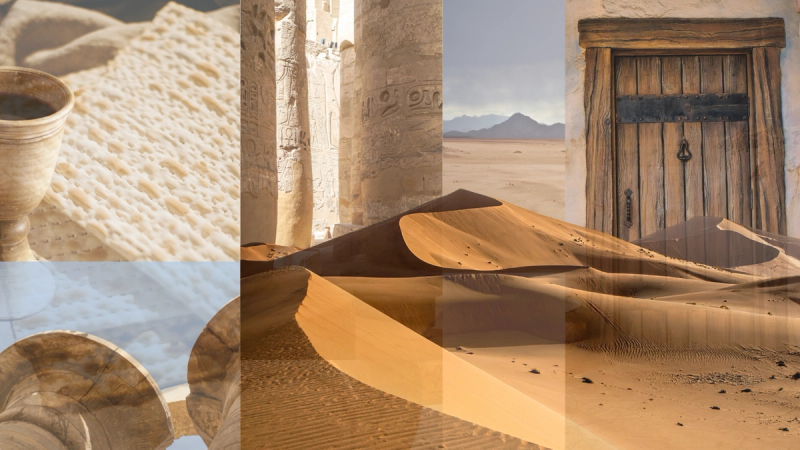
In other words, they were to be a congregation of the Passover. Just as their calendars revolved around this day, so, too, were they to be absorbed by it. Each household was to take a lamb “without blemish” or defects, kill it, roast it, and then—according to a set of specific instructions (Exod. 12:8–11)—eat it. After sacrificing this lamb, they were to take some of its blood and apply it to the doorframes of their homes as a graphic emblem of God’s mercy and preservation (Exod. 12:12–13). As the rest of the land cried great cries of unfathomable grief, where no blood was found, the blood-stained doorframes were the Lord’s distinguishing ensign of who belonged to him and who were under his gracious protection. “When they sprinkled its blood on the posts,” Rev. Alexander Maclaren once said, “they confessed that they stood in peril of the destroying angel by reason of their impurity, and they presented the blood as their expiation.” God’s people, you might say, have always been identified by the blood that sets them apart.
The point is that only those who listen to the Lord’s words would be safe (Exod. 12:21–28). They couldn’t get away with boiling the lamb or deep frying it, as much as that might’ve tasted better, nor could they apply the blood in any old way they liked. Judgment would pass over those who listened and believed in the words of God, which were words of grace, solace, and deliverance. Similarly, the Body of Christ is a congregation that listens to the words that offer relief and release from grief, judgment, and death, which come from Christ alone. The church isn’t set apart by the words of humans, institutions, councils, or symposiums—as important as they might be. Rather, the distinguishing mark of God’s people is and always has been that they are a people who listen to and find their identity in the Lord’s words, especially the Word who became flesh for them.
Exodused for Worship
Events unfold just as God said they would, as nightfall is accompanied by the angel of death who takes the life of all the firstborn where the blood wasn’t applied (Exod. 12:29–32). This, as you might imagine, sends Egypt into bedlam, with the king himself being roused in the middle of the night to find that he, too, was a victim of this divine judgment. With the deafening cries of his people echoing in the streets, Pharaoh finally had enough. After reaching the point of giving up, he forces Moses and Aaron to get out, along with the rest of their kind, much to the delight of every Egyptian citizen (Exod. 12:33). For them, the Hebrews were living reminders of the curse that had befallen them, one that would soon put them in the grave as well.
As the Exodus develops, it becomes a hurried and anxious affair. In fact, things moved so fast that the Israelites had no time to let the yeast in their dough work its magic and make their bread loaves warm and fluffy (Exod. 12:34). Instead, they were forced to bake unleavened bread due to how hastily they were constrained to leave (Exod. 12:39). But leave they did, every last one of them (Exod. 12:35–41). After more than four centuries of bondage and suffering, they were finally free; no longer slaves. This, of course, had nothing to do with them, and everything to do with their God, the I Am, who did what he promised in and for his people. They were “brought out” by someone much better and stronger than them—a fact that the Lord is eager for them to remember. In fact, near the beginning of Chapter 13, the Israelites are reminded some seven times in fourteen verses that they were “exodused” via the “strong hand” of the Lord (Exod. 13:3–16). This was an event made entirely possible through divine intervention.
But the point is that they weren’t just emancipated, and that was the end of it. They might’ve been thrust out by the Egyptians, but it was Yahweh who was bringing them out so that they could follow and worship him alone (Exod. 13:1–2, 11–12). He was their God, and they were to be his people. They weren’t just saved from something; they were saved to something. “The Israelites ate the Passover meal,” J. Alec Motyer notes, “as those committed to go walking with God.” They were rescued to become a worshiping people, that is, a community whose life and worth are found outside of them. This is the premise behind the Feast of Unleavened Bread, which called every Israelite to cast off the old leaven of sin and live in the “new” life of “sincerity and truth” (1 Cor. 5:7–8).
Just as God had “set them apart” by making a distinction between them and Egypt, they were to set themselves apart, consecrating themselves for his service. In other words, they were “brought out” so that they could follow the Lord wherever he leads or wills, a quality that endures as a defining characteristic of the church (Rom. 6:17–18). The Body of Christ is comprised of those who’ve been set free by the strong, nail-scarred hands of the Christ of God, which reconcile and embrace them, forming them into an assembly that sings endless praise to the Lamb that was slain for them (Rev. 5:9–10). The church, in other words, has been exodused for worship by the Messiah whose wounds serve as the central melody of its song. We are not our own. Rather, gloriously, we belong to the one who brought us out so that we might be gathered into his presence as a worshiping assembly.
The Meal That Preaches
Chief among the characteristics of God’s newly formed congregation is that they are a people who remember. Right on the heels of instituting the Passover, God’s first move is to ensure that what he’s about to do won’t be forgotten (Exod. 12:14–20). The blood on the doorposts hadn’t even dried yet, nor had anyone even set foot beyond the borders of Egypt, and yet the Lord was already preparing a way for them to remember. He knows how easily his people move on, how quickly we drift, and how prone we are to take his mercy for granted. Thus, he offers tangible and repeatable means by which his provision and grace can continually be called to mind. Instead of ceremonial busywork, these God-ordained rituals were designed as divine memory aids, so that those who belong to Yahweh can recall what he did for them, generation after generation.
The Feasts of Passover and Unleavened Bread were “statutes” created by God to “memorialize” the Exodus, wherein every element told the story of their deliverance. As Allan M. Harman says, “The ritual of the Passover also served to function as a teaching ministry, for there was a recital of the redemptive history.” The slain lamb spoke of the cost of deliverance and how freedom always comes at a price. The unleavened bread spoke of the urgency of their deliverance and how there’s no room for delays when God places his call on you. The blood spoke of the means of their deliverance and the redemptive judgment that made them his. The bitter herbs spoke of the pain and misery from which God delivered them. In other words, every bite they took preached something to them. The whole meal was a sermon—one that was intended to be repeated, over and over again (Exod. 12:14, 17, 24), so that even centuries later, the same testimony of God’s gracious deliverance could resonate in the hearts of the redeemed (Exod. 13:8–10).
When the soon-to-be crucified Messiah reclined around the table with his disciples mere hours before he was betrayed and given the kiss of death, he shared in one last Passover, taking each of those familiar elements and reinterpreting them around himself, and the work he was about to accomplish (Luke 22:14–20). The bread and the cup are recast as marks of the new covenant that emerges from Jesus’s death and resurrection. Thus, whenever the church partakes of the Lord’s Supper, the resonance of that first Passover meal continues to reverberate, resonating even deeper and truer in a meal that preaches the good news of deliverance from sin.
The Rhythm of Remembrance
The Exodus wasn’t meant to be an event quarantined to ancient history. Rather, it was to be the abiding and defining event that preached to God’s people how they became God’s people. “The Passover,” Michael P. V. Barrett asserts, “as is true for the entire exodus, is more than history; it conveys the message of the everlasting gospel.” Thus, the rhythm of Israel’s worship was built around this rehearsed reality, where every feast, every law, every Sabbath, and every psalm was geared towards remembering the Lord who saves, who delivers, and who keeps every single one of his promises. And the reason this is so important is because forgetfulness is the first step on the road to rebellion (Deut. 8:11–14; Ps. 78:5–8). When God’s people forget what he has done, they soon start living as though he never did it, or they begin to take credit for who they are and where they are, causing gratitude to dissipate and worship to become dull and performative.
Consequently, right from the very start, God ingrained a pattern of remembrance into the lives of his people, a pattern that is maintained whenever the church gathers to remember the work of God in Christ for them (Acts 2:42). This is the heartbeat of Christian worship—namely, a steady, deliberate rehearsal of what God has done. “Perhaps the most crucial part of our worship,” Griffin Gooch recently wrote, “is that we worship repeatedly, rhythmically, and sustainably.” When we, as the church, assemble, we engage in the same divine rhythm of hearing (again) the story of our deliverance, proclaiming it (again) to one another, and letting it shape and inform how we live. We come together, not to hear some newfangled doctrine, fresh idea, or innovative lecture. Rather, we come together to hear and remember what’s been done. This is what keeps the church steady, which is why we keep telling the same story of grace on repeat. Because when we stop remembering, we forget who we are.
Footnotes
This detail becomes all the more tragic once you make the connection that the jewelry plundered from Egypt and earmarked for the Tabernacle is the same jewelry Aaron confiscates to fabricate his golden calf (Exod. 32).
BackAlexander Maclaren, Expositions of Holy Scripture, Vols. 1–17 (Grand Rapids, MI: Eerdmans, 1944), 1:1.40–41.
BackJ. Alec Motyer, The Message of Exodus: The Days of Our Pilgrimage, Revised Edition, The Bible Speaks Today (Downers Grove, IL: InterVarsity Press, 2021), 118–19.
BackAllan M. Harman, Exodus: God’s Kingdom of Priests, Focus on the Bible Commentary Series (Ross-shire, England: Christian Focus, 2017), 134.
BackMichael P. V. Barrett, The Gospel of Exodus: Misery, Deliverance, Gratitude (Grand Rapids, MI: Reformation Heritage Books, 2020), 107.
Back